Where to retire in Southeast Asia, compared by lifestyle, not just numbers.
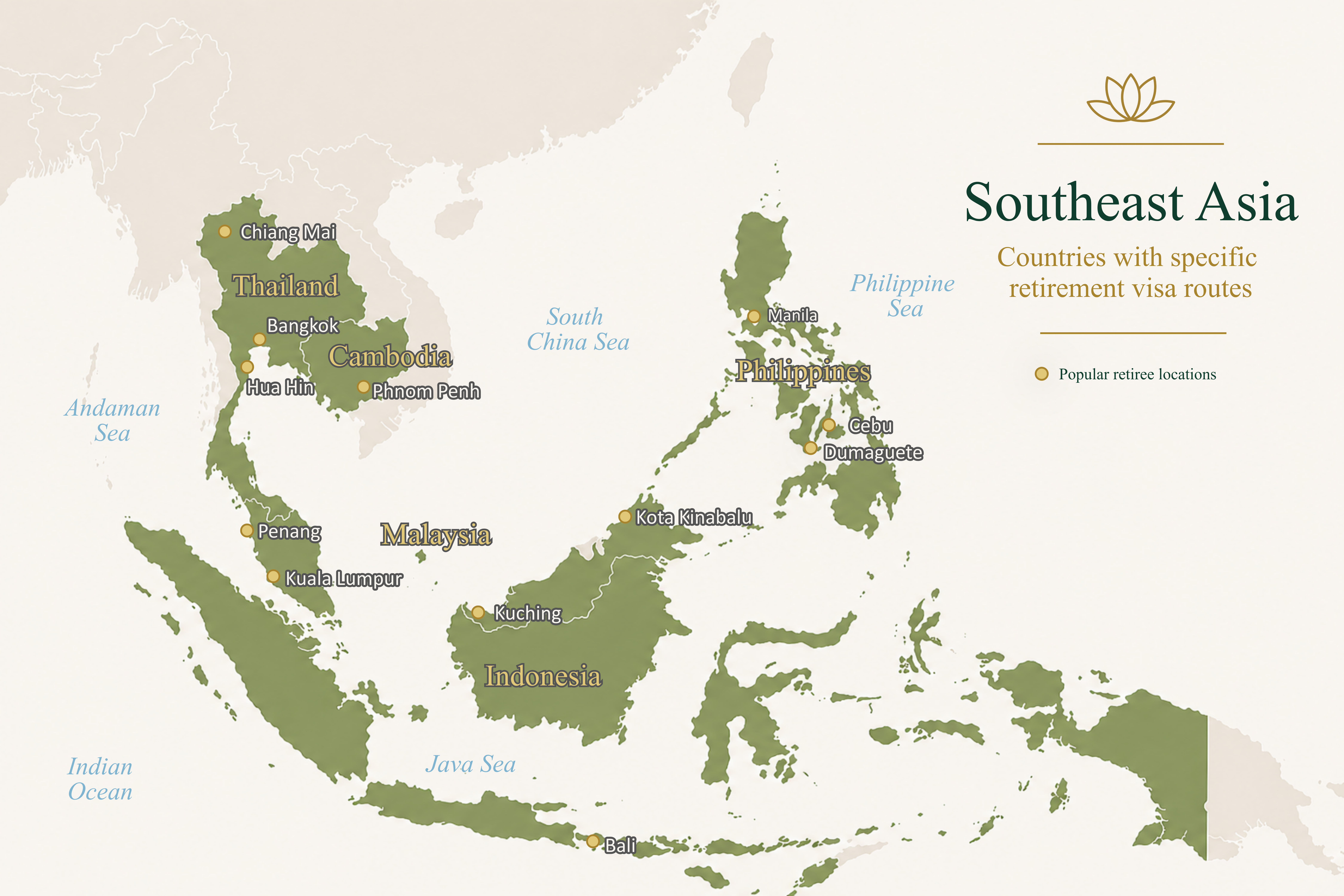
The focus is on the countries most commonly considered by UK, US and European retirees that offer retirement visas - Malaysia, Thailand, the Philippines, and the wider region including Indonesia and Cambodia. The aim is not to rank them, but to understand how each one fits different lifestyles, priorities and longer-term plans.
Starting points
Different countries suit different retirement plans.
Use the cards below as a starting point. Selecting a card will show more detail beneath the comparison grid.
Countries with specific retirement or long-stay visa routes.
Malaysia
Malaysia: the balanced all-rounder.
Malaysia is often one of the most natural starting points, particularly for UK or US retirees considering Southeast Asia: familiar enough to feel accessible, but different enough to change what retirement could look like.
Kuala Lumpur, Malaysia
Potential strengths
Despite some recent changes, it has well-established retirement routes under the MM2H scheme
Strong private healthcare in major cities and established expat locations
English widely spoken in many practical settings
Varied lifestyle options: Penang, Kuala Lumpur, Johor, Langkawi and East Malaysia
Potentially attractive treatment of foreign-sourced income, subject to current rules and personal circumstances
Who this often suits
Those seeking a structured and predictable base
Retirees prioritising healthcare, English-language practicality and infrastructure
Individuals looking for a balanced long-term option rather than a purely lifestyle-led move
Points to examine
Visa rules and qualifying criteria can change
Property purchase rules vary by state and scheme
Later-life legal arrangements should be considered carefully
Lifestyle varies significantly between KL, Penang, Johor, Langkawi and East Malaysia
Sarawak has its own version of MM2H that does not require a property purchase.
Later-life considerations
Access to private healthcare is strongest in major centres
Later-life care options exist but need careful, location-specific assessment
Exit planning matters: keeping home ties, professional contacts and a return route should also be considered
Bottom line
A practical first country to assess.
Malaysia is often worth considering first if you want a relatively structured, practical base from which to assess retirement in Southeast Asia.
Thailand
Thailand: lifestyle-led, but more moving parts.
Thailand has enormous lifestyle appeal, with an unmatched range of locations and established expat communities. The trade-off is that the practical route can require more careful navigation.
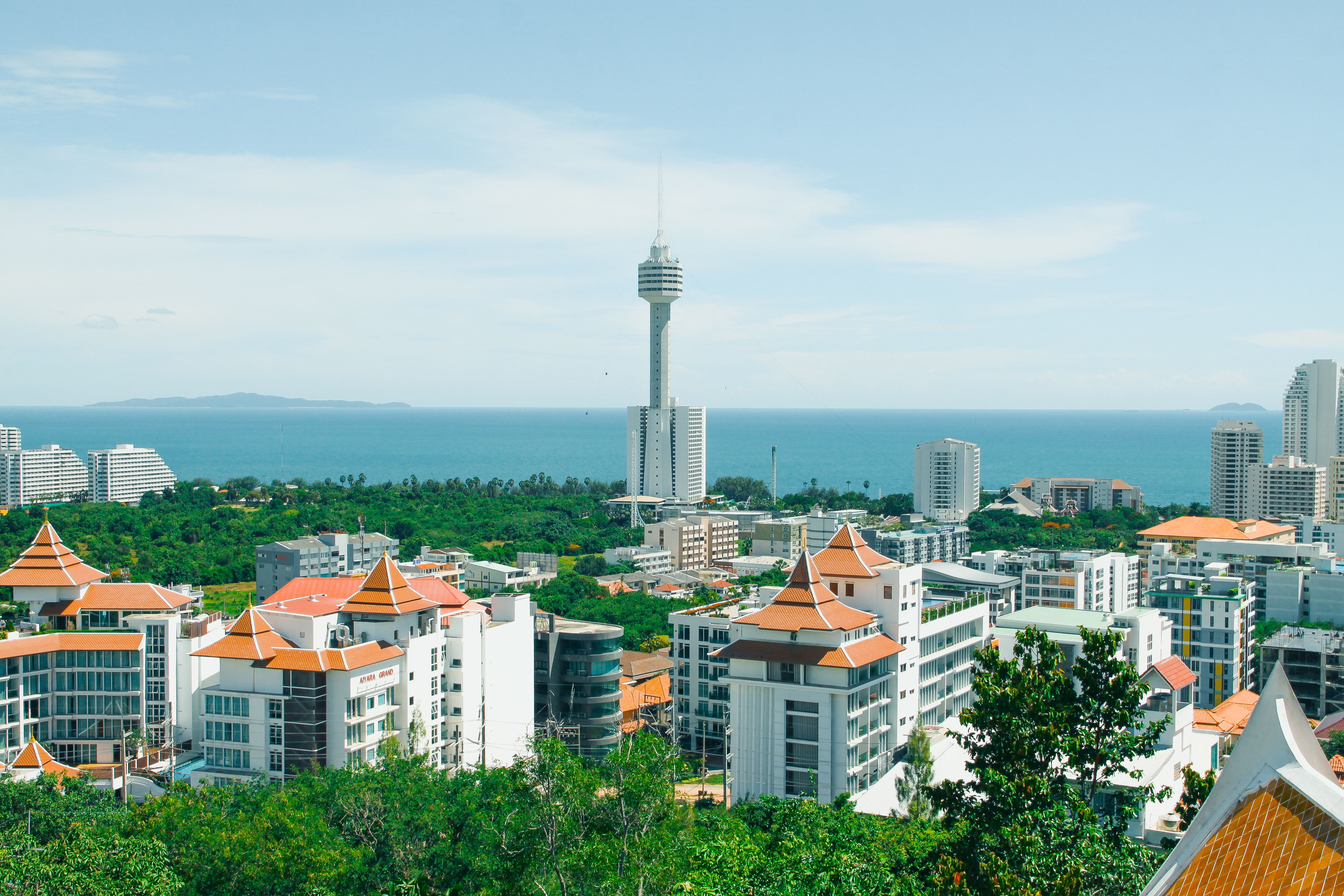
Pattaya and Jomtien, Thailand
Potential strengths
Wide choice of locations: Bangkok, Chiang Mai, Hua Hin, Phuket, Pattaya and island/coastal areas
Strong lifestyle appeal and mature expat infrastructure
International-standard healthcare in key centres
Broad range of accommodation and service levels
Increasingly visible later-life and care options
Who this often suits
Lifestyle-first retirees who are comfortable with more moving parts
People who value choice of location and a large expat ecosystem
Those willing to manage visa, ownership and administration carefully
Points to examine
Visa routes and conditions need close checking, some "rules" are open to interpretation
Healthcare and insurance should be planned carefully as you age
Ownership and property structures need proper understanding
Quality of infrastructure and services varies by location
Later-life considerations
Excellent hospitals are available in key centres, but location choice matters
Care and assisted-living options for expat retirees are numerous but can vary in quality and style
A plan for serious illness, incapacity or return to your home country should be built in early
Bottom line
Superb for the right lifestyle, less simple as a process.
Thailand can be a superb retirement option, but it needs to be approached as a practical decision rather than simply a lifestyle dream.
Philippines
The Philippines: accessible, English-speaking and often underrated.
The Philippines can appeal to retirees who want lower financial barriers, widespread English and a warmer, more informal lifestyle. It may not offer the same polish everywhere, but it can be highly practical for the right person.
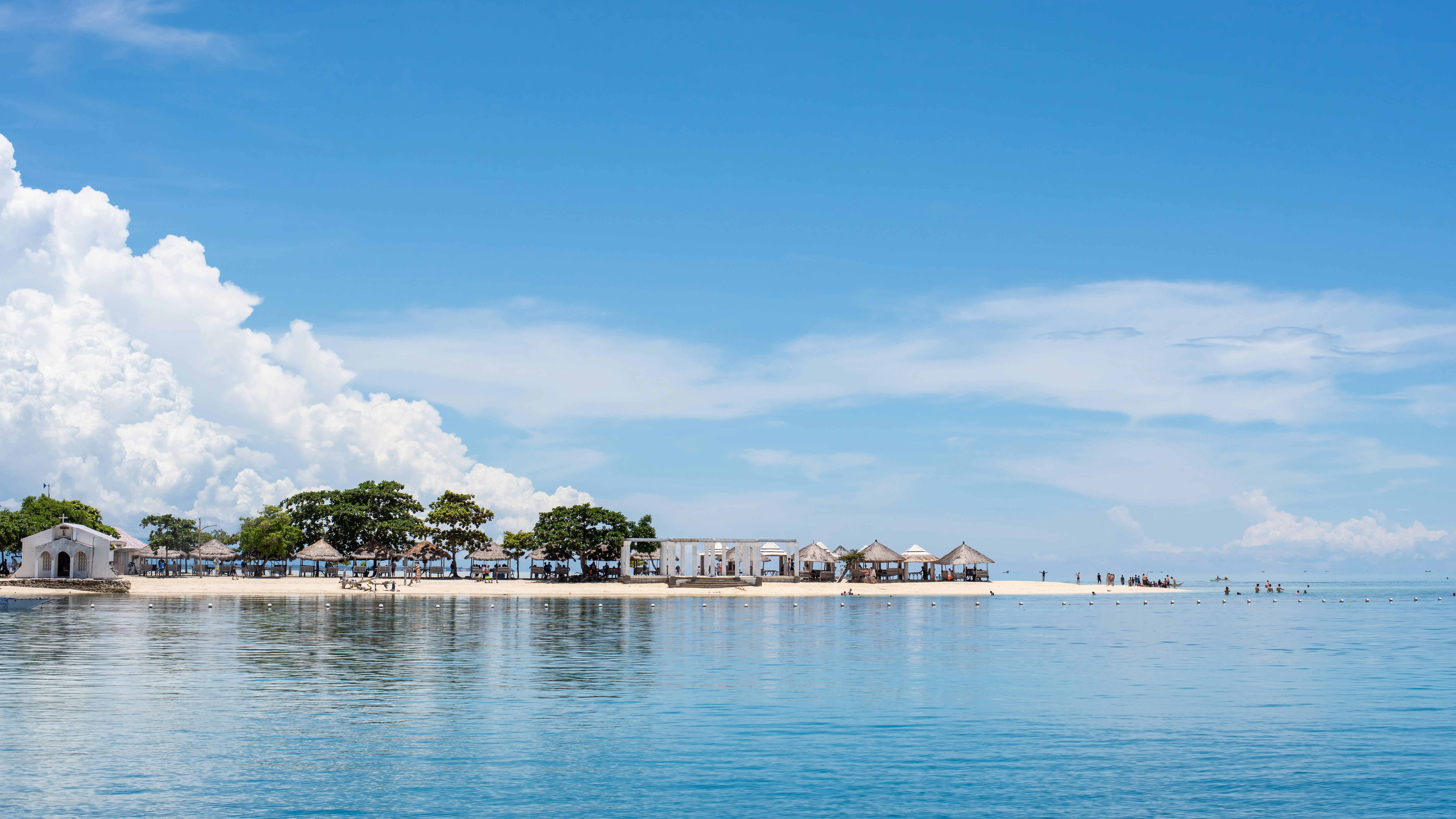
Pandanon Island, Cebu, Philippines
Potential strengths
English widely spoken
Generally lower cost of living than many of its neighbours
Accessible retirement visa options in many cases
Island, city and provincial lifestyle choices
UK state pension uprating currently applies
Who this often suits
Retirees who value ease of communication and a lower cost base
Those comfortable with a more informal and less polished environment
People who prioritise community, family links or island living
Points to examine
Healthcare and infrastructure vary considerably by location
Weather, typhoons and resilience planning matter
Local banking and administration can take patience
Location choice is especially important for long-term comfort
Later-life considerations
Healthcare backup may need to involve Manila, Cebu or overseas options
Family, community and support networks become especially important
Emergency planning is important in areas exposed to typhoons or weaker infrastructure
Bottom line
Practical and accessible, but location-sensitive.
The Philippines is often worth considering where ease of communication and affordability rank highly, but location selection needs particular care.
Wider region
Wider region: Cambodia and Indonesia are interesting niche options.
Some adventurous retirees may also consider destinations beyond the three core countries. These options can be appealing, but they are usually less standardised and often require a more independent, flexible approach.
Bali, Indonesia
Indonesia
Indonesia, particularly Bali, has obvious lifestyle appeal. For retirement planning, however, it is best suited to people who are comfortable with more variation and a less standardised experience.
Cambodia
Cambodia can be attractive for retirees who want a simpler, lower-cost base and are comfortable with a more independent lifestyle. It is less polished, but that is part of both the appeal and the risk.
Potential strengths
Strong lifestyle appeal in selected locations, particularly Bali
Creative, wellness and international communities in some areas
Potentially attractive cost base depending on lifestyle
Rich culture and natural environment
Potentially much lower cost of living in Cambodia
Who this often suits
Independent retirees comfortable with uncertainty and local variation
People who prioritise lifestyle or niche locations over structure
Those with robust contingency plans and flexible expectations
Points to examine
Visa and residency options require careful handling
Infrastructure and services vary widely
Healthcare planning may involve regional or international backup
Legal, banking and property practicalities need caution
Later-life considerations
Not all attractive locations are equally practical as health needs increase
Access to high-quality care may require regional travel
Less suitable for those who want a highly structured retirement environment
Bottom line
Compelling, but rarely the default option.
The wider region can be compelling for the right person, but it is usually better treated as a carefully assessed fit rather than an obvious default.
Next step
Found a country that fits the brief?
Reading the comparisons is a useful start, but the right country usually depends on details that are specific to you. The next step is a structured conversation to test the idea properly.